Japanese-Latin Influences at dokidoki

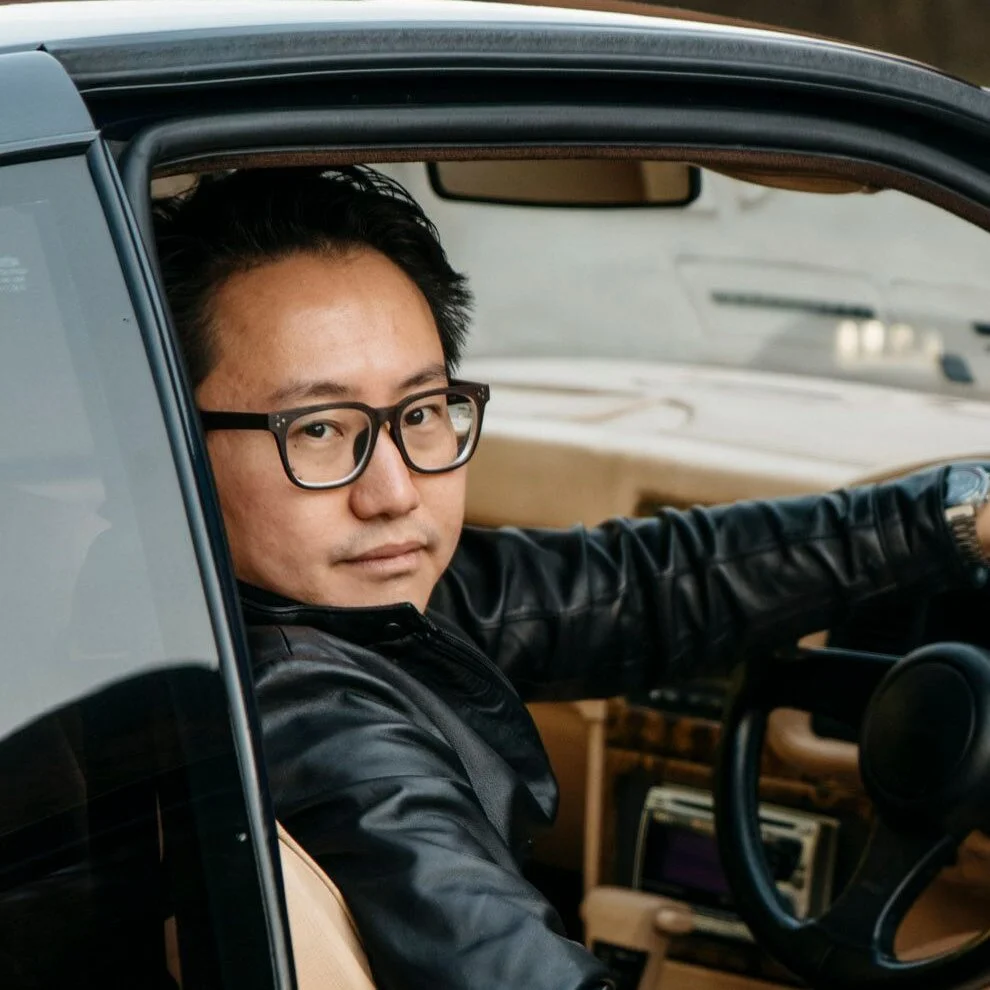
Christian “Suzu” Suzuki-Orellana and A-K Hada, co-owners of dokidoki in Williamsburg, Brooklyn.
Opening its doors earlier this year, dokidoki is a cozy new spot in Williamsburg that emphasizes low-alcohol Japanese and Latin cocktails. But don’t call it “fusion:” founders A-K Hada and Christian “Suzu” Suzuki-Orellana deliberately wanted to avoid that word. “More like a melting pot, right?” says A-K. “Things that we both love of Japanese and Latin American culture.”
A-K is an alumnus of some of the most respected bars in New York, such as Existing Conditions and PDT, where she served as Head Bartender and also helped open their location in Hong Kong. Suzu built a following at cocktail bars and pop-up events in San Francisco before recently taking the show across North America with his Kagano Pop-Up, and also competed in Netflix’s bartending show Drink Masters.
Most importantly, dokidoki—which Suzu describes as “a bit of a happy accident”—reflects both their cultural heritages. Both A-K and Suzu are half-Japanese, and Suzu took the opportunity while opening the space to explore his El Salvadoran heritage. A-K brought her experience working in Puerto Rico while serving as Brand Ambassador for Bacardi, where she brought bartenders from the States to educate them about the rum and the culture of the island.
With an emphasis on small-batch ingredients that encompass shochus, blueberry wine, barrel-aged sakes, dokidoki’s cocktails open the door for guests to ask questions and stoke their curiosity for underrepresented components.
We wanted to learn more about the cultural influences and bridges that dokidoki aims to foster, so we sat down with A-K and Suzu over cocktails like the Chucu-Chucu (Watanabe Shochu Bros Imo sweet potato shochu, agave wine, lime, honeydew) and the Dondoko Dance (Mukai Shuzo Junmai Ine Mankai red rice sake, coconut water, umeboshi acorn), and an absolutely killer cod katsu sandwich.
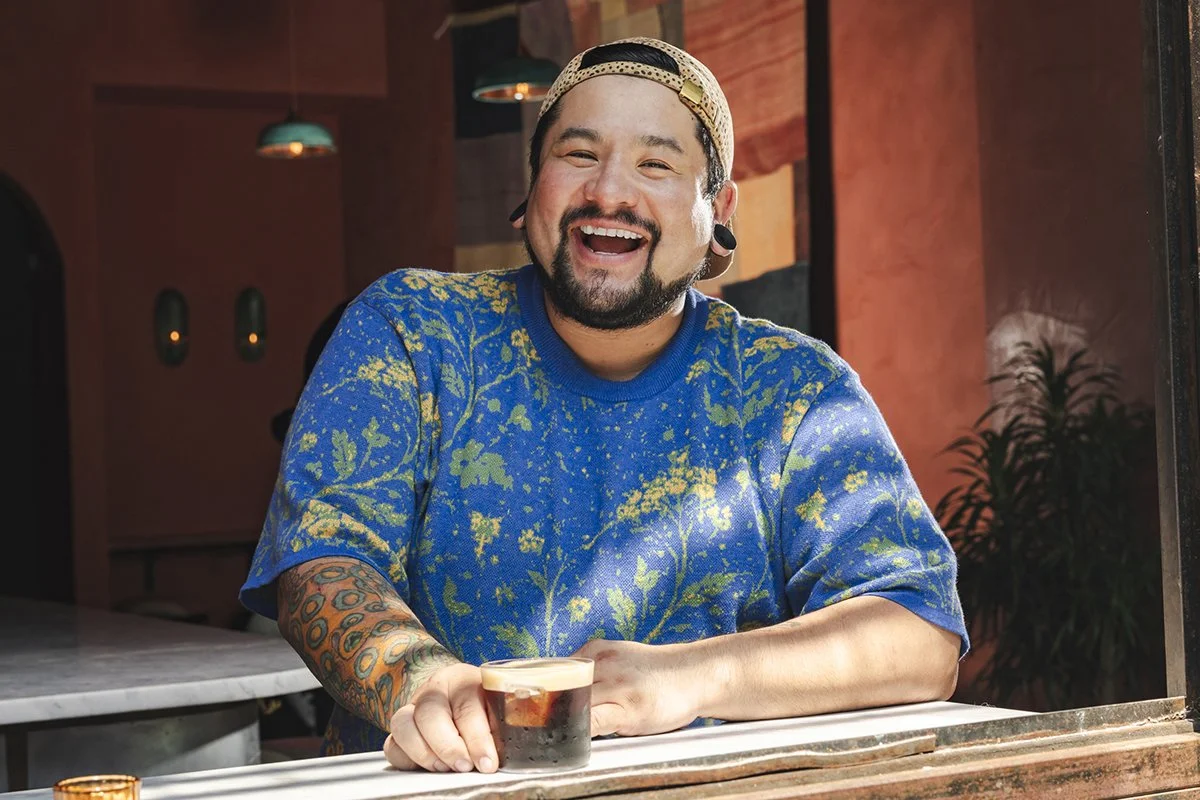
Christian “Suzu” Suzuki-Orellana
What opportunity or gap in the beverage industry inspired you to build dokidoki?
Suzu: Personally, low-alcohol has been present in my career. The very first bar I ever worked at in San Francisco became a sherry bar with a strong sherry presence in the cocktail menu. We still had a full liquor license, but we were extremely focused on sherrys. So I knew more about sherry varietals before I knew about wine. And the last bar I ran was a martini bar, but naturally we became super invested in vermouth. We had a selection of roughly 20 vermouths by the glass.
A-K: The practical side was getting a great location in a decent neighborhood next to an incredibly busy pizza spot [L’Industrie]. And then the creative side is exactly just what you can do within that space. It was really important for us for the whole concept to be approachable. Cocktail culture dies if you don't continue to build it.
What's been the biggest challenge you didn't anticipate?
A-K: Our first week was pretty insane. It was during the heat wave. We have a little friends and family on day one of the heat wave, and we swiftly realized that if you were basically sitting at the bar it was okay, but if you were elsewhere, it was 10 degrees hotter. I passed out hand fans to everybody. And then the heat had gone down, but then there was a transformer fire on the street. So I'm standing by the window. The windows are open, and there’s thick black smoke billowing out of the manholes in the street. Two hours later was a crazy thunderstorm. And then day three was Fourth of July, so there were kids shooting off fireworks. Summer in New York's always chaotic. That's why we love it.
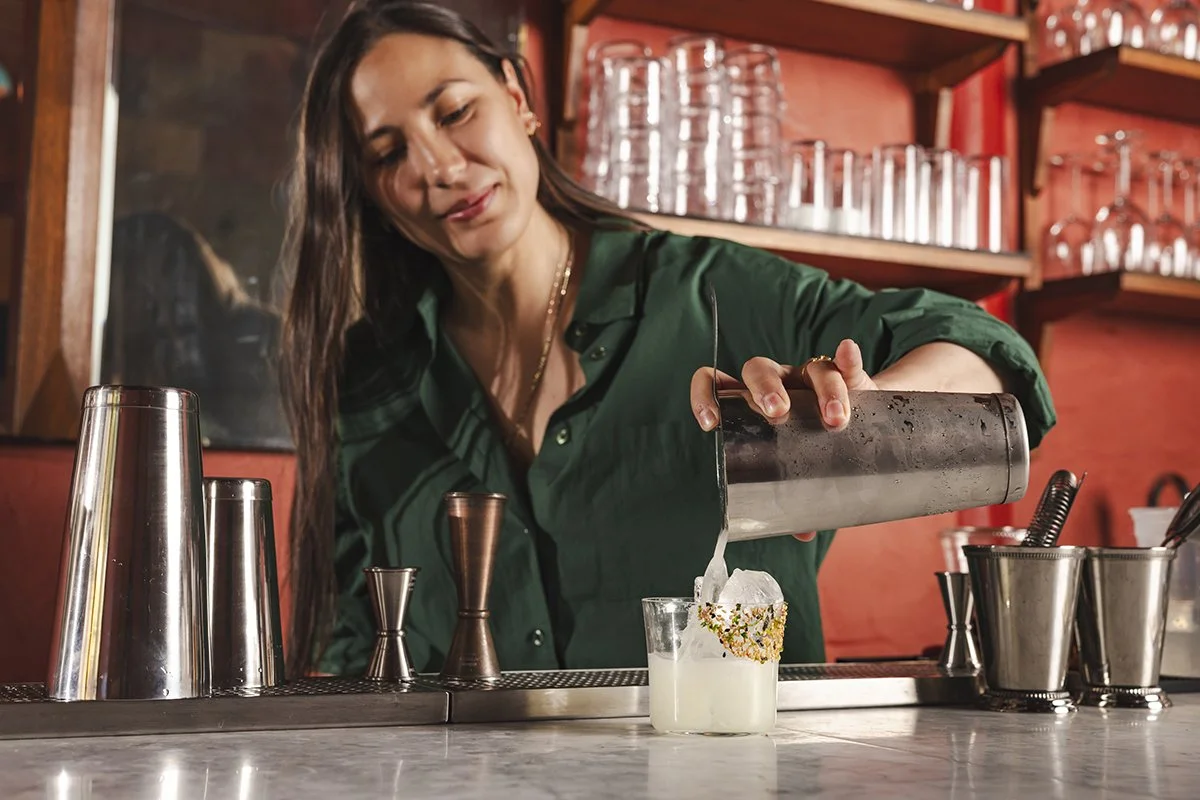
A-K Hada
What’s one lesson you've learned in your career that you wish you knew earlier?
A-K: A lesson I wish I had learned earlier would have been to believe in myself and my capabilities. I have been blessed with amazing mentors and peers, and it’s taken me a while to fully have faith in myself and in the people around me to guide me to where I am today.
Suzu: Work-life-balance. I worked and hustled for so long in San Francisco. When I left, my memories for the last 16 years were mostly about advancing my career. I don't regret it, but that experience is what makes my move to New York so important for me: to take full advantage of the city's offerings without dedicating my entire life to work.
What trend, consumer behavior, or shift in the industry are you most excited about right now?
A-K: Shochu. Iichiko and Nikaido, these are my friends. The diversity and the category is just so huge. So, anything we can do to expand people's perception of what it is. Everybody just thinks, oh, that one thing that tastes like cantaloupe. And that's it.
Suzu: I love that low-alcohol has had its moment after the pandemic. We like to really emphasize that we're not low-ABV for the sake of health and wellness and we're not taking away the flavor and effort it takes to develop a cocktail.

Pairings such as cod katsu-sando, tebasaki, and the Ichiki Tini showcase dokidoki’s playful approach to food and drink.
How has your cultural background influenced the way you approach your work?
A-K: When we came up with the concept, we're very decidedly avoiding the word fusion here. More just like a melting pot, right? We both love Japanese and Latin American culture. The consulting chef, Daniel Maysonet, is from a restaurant in Puerto Rico called Jungle Bird that's pretty popular. And he is amazing, but also specializes in a lot of Asian food. In Puerto Rico they call it Chino Latino. It's like a subcuisine, right? We wanted somebody, whether they were Japanese or Latin, to be able to fully speak to both, to understand what we're trying to get across.
Suzu: My cultural background has everything to do with how I approach my work. My grandparents started their career with a cocktail bar in Tokyo, which expanded to four restaurants and a ranch and farm that sourced all their produce and meats. My grandparents had me travel back home to Tokyo up to 2-3 times a year to learn more about Japanese hospitality, management, food, etc. I carry all the lessons and memories with me and project them into my work today.